Preliminary Dance Assessment: Part A.
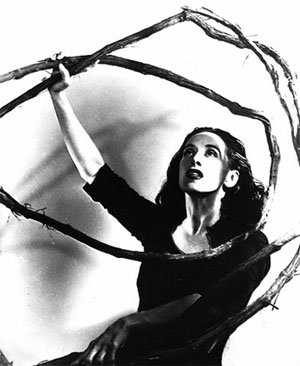
Martha Graham.
“Great dancers are not because of their technique, they are great because of their passion.” - Martha Graham.
Background and Dance Training.
Martha Graham
was born in
Martha Graham’s technique of choreography and inspiration started with what she said to be a ‘certain stirring’. Martha would often base her choreography on a remarkable theme or intent. She was stimulated in evoking deep, strong emotion throughout her choreography.
She found inspiration in a variety of sources such as American history, biblical stories, historical figures, myths, paintings, poems and political matters. Mainly inspired by ancient myths, she utilized them in her choreography stating “Myths are the psychology of an earlier time”.
In 1930 Martha Graham developed a new dance technique based on the Delsartean philosophy of tension and relaxation, that she named contraction and release.
Martha Graham desired to enhance knowledge and awareness regarding life and the nature of humanity; she wanted the dancer’s body to be connected to natural motions and the music. She would trial and experiment with the anatomy of the body and what it was capable of developing.
Martha did not use music for inspiration instead she would use it to make her choreography more dramatic. Music was more of enrichment to her work rather than source for choreography.
Her choreography had a highly disciplined approach. Her movements were motions that indicate pain, love or fear. A continuous build up of tension was created through her technique through the usage of high levels of control and stylized body positions originating from the upper torso.
The Martha Graham Dance Company was founded in 1926 showcases pieces choreographed by Graham and presents new choreographed works created by contemporary artists inspired by Martha Graham's works. The company holds programs bringing together a variety of works of renowned choreographers from history. The company also offers The Martha Graham School of Contemporary Dance available for students all over the world to study the Martha Graham technique and pieces from her repertoire.
Lamentation: A exceptionally controversial contemporary piece for the time of the Great Depression. Abstract and emotional embodies Graham’s contraction and release technique displaying distorted, sharp lines.
Night Journey: An emotional and dramatic contemporary story. Steps in this piece are still used in dance today. The use of the props were symbolic adjusting the scenery.
In Graham’s style the movement is tense and abrupt displaying little motion and like the other pioneers of modern dance Martha Graham went against the traditional technique of ballet, finding her own modern style. Graham wanted the dancer’s body to be related to natural motion and the music. She would experiment with the anatomy of the body and what it was capable of developing “percussive movements”
In 1930 Graham had developed a new dance technique known as contraction and release based on the Delsartean philosophy of tension and relaxation. This was a new type of muscle control which Graham developed gave her dancers a unique look contrasting heavily with the type of dance present in Graham’s time. Her movements stem in motions that signify pain, love or fear. A continuous build up of tension is created through her technique using high levels of control and stylized body positions originating from the upper torso.
Martha Graham was a significant dancer, choreographer and communicator that played a significant role in the development of modern dance. Her contributions to modern dance revolutionized dance as an art form.
Martha Graham was the first choreographer to use African American and Asian dancers in her company, this was a significant development in modern dance. She recognized the use of moving scenery and merged speech with dance which was not utilized prior to Graham’s choreography.
