Preliminary Dance Assessment: Part A.
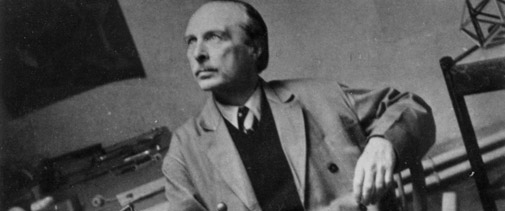
Rudolf Laban.
“The astonishing structure of the body and the amazing actions it can perform are some of the greatest miracles of existence. Each phase of a movement, every small transference of weight, every single gesture of any part of the body reveals some feature of our inner life.” -Rudolf Laban
His father was an officer and encouraged Laban to pursue the same career. After a minimal time in military school Laban left in 1900 and went down a different pathway studying at the Ecole des Beaux Arts in Paris focusing on dance, stage design, and drama for the next 7 years. He also performed at the Moulin Rouge during this time.
In 1905 Laban began researching ancient dance rituals and movements. Laban received a gold medal in an international competition for his design model of a dance theatre. Rudolf became director of the Lago Maggiore Summer Festival in Switzerland for 3 years. While seeking refuge from the war Laban started his own school and held a number of productions. Between 1919-1923 Laban began to branch out his schools founding them in cities all over the world. In 1927 Laban founded an organization to assist dancers with no social standing and the following year published his own book.
From travelling as a child, Laban’s cultural influences and knowledge inspired his choreography to a degree. Laban throughout his research was intrigued by the character of rhythms and space harmonies. He was inspired and captivated by observing people’s actions in everyday life based on the scientific laws of kinetics. This made him strive to begin the study the psychological effects of movement.
He also got inspiration from the philosophies of Pythagoras and Plato and from mythology, rituals, dance, art and mathematics.
Laban believed that a dancer’s movement should display the principles of sacred geometry and architecture. He believed sacred geometry was personified in dance. Laban believed that movement begins from the body, mind and spirit. He had a philosophy of an organic lifestyle.
Laban is best known for his study and his philosophy of interpreting, describing and visualizing the movement of humans. This philosophy is known as Laban’s Movement Analysis (LMA), which can be broken down into the four categories body, effort, shape and space.
Body: This explains the anatomical distinctiveness of the body in movement.
Effort: Can also be described as dynamic. It is a method in comprehending refined characteristics in regards to movement done with instinctive intent.
Shape: Refers to how the body changes shape in movement.
Space: Movement in correlation with the environment concerning spatial awareness.The Laban Dance Centre in London was founded by Rudolph Laban. The college offers post graduate and undergraduate degrees dance theatre, dance science and scenography. The college is part of the Trinity Laban Conservatoire of Music and Dance also in the UK offering a diversity of programmed and courses in contemporary dance education.
Litchwende 1923: (Dawning Light) performed by 80 dancers, some played percussive instruments.
Agamemnon’s Tod 1923: The death of Agamemnon.
Dammernde Rhythmen 1924: Twilight rhythms.
The 1927 Titan: A piece displaying the power of community in humanity
Festzug des Handwerkes und der Gewerbe 1929: Pageant for the Crafts and Trades and consisted of 10,000 performers.
Alltag und Fest: (Everyday Life and Festivity) a large group piece choreographed for the 150th anniversary for the Mannheim National Theatre.
Laban achieved in embodying the spirit through dance as an art form and trained a universal method to movement. Laban is best known for his research and his philosophy of interpreting, describing and visualizing human movement. This philosophy is known as Laban’s Movement Analysis (LMA). Laban would study each single motion to discover meaning and intentions. Laban would also modify his teaching methods to suit individuals. The aspirations and outcomes of Laban’s techniques were highly diverse. Laban created a technique for a new style of dancing and a new type of dancer.
Significant Role in the Development of Dance.
Rudolf Laban played a significant role in the development of modern dance. Laban allowed generations of dancers to dance in a new way to distinguish dance as an art form. Laban summarized the laws of movement in dance into comprehensible notions.
Laban produced a technique for a new type of dancer and a new style of dancing. He taught the principle of tension and the unity between the body and space. Laban created a form of community dance and he developed the idea of natural dance for all people. Laban’s principles of movement are still used in dance to the present day.